Understanding touring caravans: An ultimate glossary
Published:
Whether you are completely new to caravanning or simply want to brush up on industry terminology, understanding the language used in the world of touring caravans can make your adventures easier, safer and more enjoyable for all.
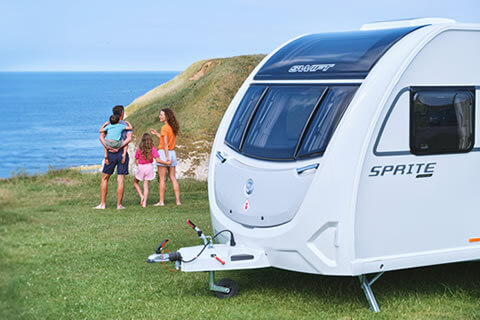
From towing to onboard technology, caravan travel comes with a huge range of phrases that often confuse newcomers.
This glossary brings together the essential terms you are likely to come across when choosing, towing or using a Swift caravan, explained clearly and simply.
A Frame
The triangular frame at the front of the caravan where the coupling head is attached. It connects the caravan to the towbar on your vehicle and provides stability during towing. Many caravanners also use this area for storing light accessories such as jockey wheels or security devices.
Awning
An awning is an additional sheltered space that attaches to the side of your caravan. It creates extra living, dining or storage space and is popular on longer stays. Awnings come in full, porch or inflatable styles, allowing caravanners to choose based on their space and convenience needs.
Berth
A berth refers to the number of people a caravan can comfortably sleep. For example, a four berth caravan sleeps four people. Swift caravans come in a variety of berth options, making it easy to match layouts to your family or travel group.
Cassette Toilet
A compact toilet fitted inside a caravan with a removable waste holding tank. The cassette tank can be taken to a disposal point at campsites for emptying. This system keeps facilities clean and convenient without requiring complicated plumbing.
Corner Steadies
These are the legs located at each corner of a caravan that are wound down once you are parked. They help stabilise the caravan so it does not rock when you move around inside. They are not designed to lift the caravan, only to keep it steady.
Coupling Head
The mechanism that attaches the caravan to the towball on your tow vehicle. It locks into position to create a secure connection, and many modern coupling heads include built-in stabilisers that help reduce sway while towing.
CRiS Number
A CRiS number is the unique registration number of a caravan in the Caravan Registration and Identification Scheme. It helps with ownership checks, security and insurance. You will find the CRiS number etched into the windows and recorded on the caravan's documents.
Dinette
A dinette is a small dining area within a caravan that usually converts into a sleeping space. Daytime seating transforms into a night-time bed, making it ideal for families who want a flexible interior layout.
GVM, MTPLM and MIRO
Understanding caravan weights is essential for safe towing.
MIRO (Mass in Running Order)
The weight of the caravan as delivered from the manufacturer, including standard equipment.
MTPLM (Maximum Technically Permissible Laden Mass)
The heaviest weight the caravan is legally allowed to be when fully loaded. You must not exceed this figure.
Payload
The difference between MIRO and MTPLM. This is the total weight of everything you load into the caravan including clothing, food, equipment and accessories.
An example for the Sprite Alpine 4:
- MIRO is 1102kg
- MTPLM is 1247kg
- Giving you a payload of 145kg
Grey Water
Grey water refers to waste water from sinks and showers. This is collected in an external container and emptied at a designated waste point on site. It is separate from toilet waste.
Hitch Lock
A security device fitted over the coupling head to prevent the caravan being hitched to a tow vehicle by anyone else. It offers peace of mind both at home and on campsites.
Jockey Wheel
A small wheel at the front of the caravan that helps you manoeuvre it by hand when it is detached from the tow vehicle. It also helps position the caravan for hitching up.
Leisure Battery
A battery designed to power the caravan’s internal electrics when you are not connected to mains supply. It powers lighting, pumps and some appliances. Swift caravans have efficient battery use thanks to modern technology that supports longer off-grid stays.
Mover (Caravan Mover)
A remote-controlled system that operates rollers fitted to the caravan wheels. It allows you to move the caravan precisely into position without needing the tow vehicle, making tight pitches easier to access.
Nose Weight
The weight placed on the towball by the front of the caravan. Ensuring the correct nose weight is crucial for safe towing. Too much or too little can affect stability and cause sway.
Off Grid
Caravanning without using mains electricity. This relies on your leisure battery, gas and solar panels if your caravan is equipped with them. Many Swift models are designed to be efficient and capable for comfortable off-grid touring.
Pitch
A pitch is the designated space on a campsite where you park your caravan. Pitches can vary from basic grass plots to fully serviced options with water, drainage and electric hook-up points.
Stabiliser
A device or feature that helps prevent trailer sway while towing. Many modern caravans and tow vehicles include built-in anti-sway technology, making towing smoother and safer.
Towing Mirrors
Additional mirrors fitted to your tow vehicle to give a clear view down both sides of the caravan. They are a legal requirement whenever your caravan is wider than your car.
Truma and Alde Systems
Many Swift caravans come with either Truma or Alde heating systems.
- Truma systems provide warm air heating and hot water
- Alde systems offer hydronic heating similar to domestic central heating
Both create a warm, comfortable interior for year-round touring.
U Layout
A U shaped seating layout typically found at the front or rear of a caravan. It offers generous lounge space and often converts into a large double bed, making it popular for sociable holidaymakers.
Water Pump
A component that feeds water from your external or internal tank to your taps and shower. It is essential for maintaining consistent water pressure inside the caravan.
Waste Hog and Aqua Roll
Common portable containers used by caravanners. The Aqua Roll stores fresh water and rolls easily across the ground, while the Waste Hog collects grey water for disposal. They are essential items when staying on most campsites.
Summary
Touring caravanning comes with a lot of terminology, but once you understand the basics, it all becomes second nature. Whether you are choosing your first Swift caravan or refining your touring knowledge, this glossary gives you the foundation you need to feel confident on the road. With the right understanding and the right caravan, your journeys will be smoother, safer and far more enjoyable.