Campervan bed layouts explained: Which configuration is right for you?
Published:
Choosing a campervan is about more than finding the right size, specification or styling. The layout inside can make a real difference to how comfortable and practical your campervan feels, particularly when it comes to getting a good night's sleep.
From fixed rear beds that are always ready for bedtime to flexible seating that converts into a sleeping area, different campervan bed layouts offer different advantages. Some prioritise convenience, while others make better use of the available living space or provide additional sleeping room for family and friends.
So, which campervan bed layout is right for you? In this guide, we explore the main options, their benefits and the things to consider before choosing your ideal campervan.
What are the different types of campervan beds?
Campervan sleeping arrangements vary depending on the size and design of the vehicle. Understanding how each configuration works can help you decide which features matter most for your travels.
Fixed beds
As the name suggests, a fixed bed remains in place rather than needing to be assembled each evening. Depending on the layout, it may sit across the rear of the campervan or run lengthways along the vehicle.
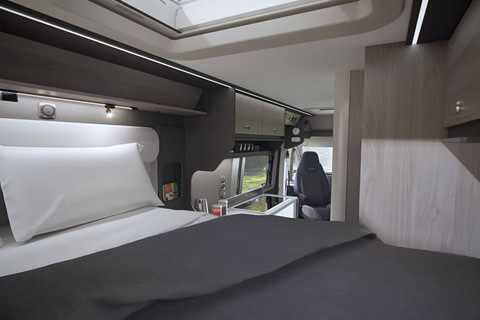
One of the biggest advantages of a fixed bed is convenience. There's no need to rearrange seating, move cushions or prepare a sleeping area when you're ready to turn in. It's a practical option for those who tour regularly, enjoy longer trips or simply prefer a consistent bedtime routine.
Fixed beds can also make efficient use of space beneath the mattress, with some designs providing useful storage for luggage, outdoor equipment and other touring essentials.
However, a permanent bed takes up space throughout the day, potentially reducing the room available for seating and other activities.
The Swift Merlin is ideal for demonstrating the convenience of having a dedicated sleeping area in a campervan, the 164 model (pictured above) features a fixed rear double bed (6’2” x 4’9”) whilst the 274 model has two fixed rear single beds (6'1" x 2'3" and 5'11" x 2'3").
Convertible lounge beds
Some campervans use the lounge or dining area as the main sleeping space. Seats and cushions are rearranged, sometimes with a table lowered or removed, to create a bed.
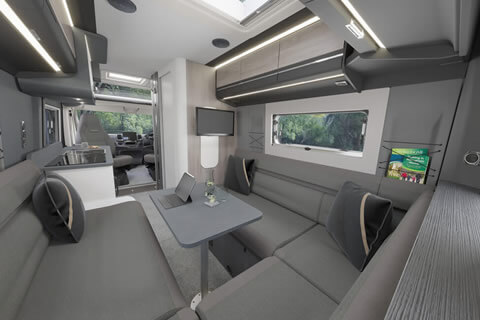
The biggest benefit is versatility. The same area can be used for eating, relaxing, reading or socialising during the day before being transformed into a sleeping space at night.
This can be an effective way to maximise the available interior, particularly if you prefer having a more open living area rather than a permanent bed.
The trade-off is the daily conversion process. You'll need to follow the correct setup, move cushions and find somewhere to keep bedding and other items. It's worth checking how straightforward the process is and whether the resulting sleeping surface feels comfortable and supportive.
The Swift Merlin 144 has a rear parallel lounge that converts into a double (6’1” x 4’7”), making this a good example of a layout that combines daytime seating with a sleeping area. The Carrera 122 (pictured above) gives you the flexibility to convert the rear lounge into either a double bed (6’1” x 6’0”) or single beds (5’11” x 2’1” and 6’0” x 2’1”), ideal for couples and occasional tourers who value daytime living space and don't mind preparing their bed each evening.
Pop-top beds
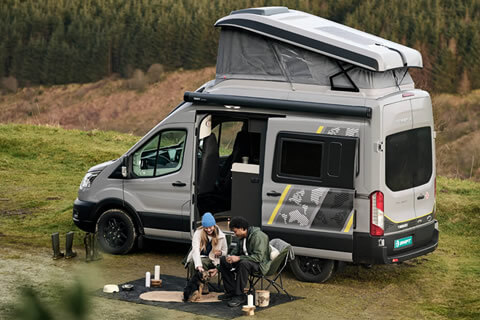
A pop-top bed makes use of the space above the main living area. The roof raises when the campervan is parked, revealing an additional sleeping area that is typically accessed by a ladder.

Rather than replacing the main bed, a pop-top often provides another place to sleep. This makes it particularly useful for families or anyone who occasionally travels with additional passengers.
Another advantage is that the roof can be lowered when driving, maintaining the campervan's more compact profile. When raised, the additional headroom can also make the interior feel more spacious.
There are a few practical considerations, however. You'll need to raise the roof and prepare the sleeping area before use, and the canvas sides and exposure to outdoor temperatures may affect comfort depending on the weather and design.
Check the available sleeping dimensions and the manufacturer's guidance to make sure the space is suitable for the people who will be using it.
The Swift Carrera 244 and Trekker X (pictured above) both feature a pop-top double bed (6’8” x 4’3” and 6’5” x 4’2” respectively) and sleeps upto 4 people - perfect for families and couples who want occasional extra sleeping space.
Twin single beds
Twin single beds provide separate sleeping spaces for two people, usually arranged alongside each other or along opposite sides of the campervan, depending on the design.
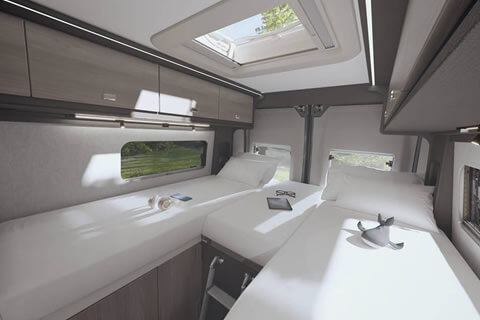
For some couples, this is an appealing alternative to a shared double bed. Each person has their own sleeping area, which can make it easier to move around without disturbing the other person.
Some layouts also allow the beds to be joined using an additional section, creating a larger shared sleeping space when required.
Before choosing twin beds, consider the overall dimensions, access between the beds and the amount of space available for other interior features. As with any layout, the exact arrangement will depend on the campervan model.
The Swift Carrera 132 offers the flexibility to convert the rear seating into either a double bed (6’1” x 6’0”) or twin single beds (6’0” x 2’1” and 6’0” x 2’1”), perfect for couples who prefer separate sleeping spaces or friends travelling together. The Merlin 174 (pictured above) features fixed rear single beds (6'1" x 2'3" and 5’11” x 2’3”), ideal for couples who prefer the convenience of having a dedicated sleeping space.

"Everyone has different priorities when it comes to touring, so understanding the layouts and features available can help make all the difference. We want to make sure our customers can find a campervan that suits not just where they want to go, but how they want to enjoy the journey along the way.
Chris Walker, Head of Marketing at Swift
Rock and roll beds
Rock and roll beds are designed to serve two purposes. During the day, they function as seating; when it's time to sleep, the mechanism allows the seat to fold or move into a flat bed.
This flexible design is particularly useful in smaller campervans, where making the most of every centimetre matters. By converting the seating area into a bed, you can enjoy a comfortable place to relax during the day without permanently dedicating floor space to a mattress.
The main consideration is that the bed needs to be set up each evening and returned to seating mode in the morning. You'll also need somewhere to store bedding when it's not in use.
If you're considering this configuration, check how easily the mechanism operates and whether the sleeping surface suits your comfort preferences. If the seating is also used while travelling, make sure the system is appropriately approved and fitted for that purpose.
Which campervan bed layout is best for you?
The right configuration ultimately depends on how you intend to use your campervan. Thinking about your typical trips, who you'll be travelling with and how you like to spend time inside the vehicle can help narrow down your options.
For couples
If you're travelling as a couple, consider whether you'd prefer a permanent bed or a more flexible living area.
A fixed bed offers the convenience of being ready whenever you need it, while a convertible lounge gives you more room to relax during the day. Twin single beds may also be worth considering if you prefer separate sleeping spaces.
Think about how often you'll use the campervan and whether you're happy to prepare the bed each evening.
For families
Families may benefit from a layout that provides additional sleeping capacity without sacrificing too much living space.
A pop-top bed can create an extra sleeping area above the main living space, while some larger campervans offer alternative multi-berth configurations.
Consider the number of sleeping places you need, the available dimensions and how easily everyone can access their beds. If you're travelling with children, their ages and sleeping arrangements may also influence your decision.
For weekend trips
If you mainly use your campervan for short breaks, a flexible layout could be a great fit.
A rock and roll bed or convertible lounge allows you to make the most of the interior throughout the day, particularly if you're spending time exploring outdoors and only need the sleeping area in the evening.
Convenience still matters, though, so look for a configuration that is quick and straightforward to prepare.
For longer touring holidays
If you regularly spend several nights or weeks away, comfort and everyday practicality become especially important.
A fixed bed may appeal because it doesn't need to be assembled each night. Storage is another key consideration, particularly if you carry clothing, outdoor equipment and other essentials for longer trips.
It's also worth thinking about how the rest of the layout works around the bed, including access to the kitchen, washroom and seating area.
For taller travellers
Bed dimensions are particularly important if you're taller than average. Some transverse beds, which run across the width of the vehicle, may offer less sleeping length than beds arranged lengthways.
Always check the actual mattress dimensions rather than relying on the layout name alone. If possible, lie down on the bed before making your decision to ensure you have enough room to stretch out comfortably.
What else should you consider when choosing a campervan bed?
The type of bed is only one part of the decision. A few other factors can help you choose a layout that works well for your lifestyle.
- Ease of use: If your bed converts from seating, try the mechanism and consider whether you'll be happy setting it up regularly.
- Comfort: Look at the mattress or sleeping surface, available support and overall dimensions. Personal comfort preferences can vary, so it's worth trying the bed where possible.
- Storage: Consider where you'll keep bedding, clothing and luggage, particularly if the bed occupies space that might otherwise be used for storage.
- Living space: Think about how much room remains for cooking, dining and relaxing once the bed is in place. A layout that looks appealing on paper may feel different when you're using the campervan day to day.
- Who will be travelling: The number of people using the campervan, their sleeping preferences and whether you occasionally need extra beds can all influence your choice.
- Your touring style: Short weekend breaks, extended holidays and regular year-round touring can place different demands on your sleeping arrangements.
Frequently asked questions
What is the most comfortable campervan bed layout?
Comfort depends on personal preference, mattress quality, sleeping dimensions and how much space you need. A fixed bed offers the convenience of a permanent sleeping area, while convertible beds can provide greater flexibility. If possible, try the bed before choosing your campervan.
Are fixed beds better than convertible campervan beds?
Neither option is right for everyone. Fixed beds are convenient because they remain ready to use, but they occupy space throughout the day. Convertible beds free up room for seating and other activities, although they need to be prepared each evening.
Can a campervan sleep four people?
Yes, some campervans can accommodate four sleepers. Depending on the model, this may involve a main bed and an additional pop-top sleeping area. Always check the manufacturer's stated sleeping capacity and dimensions, as these vary between models.
What is a pop-top bed in a campervan?
A pop-top bed is located in a raised roof section that can be lowered when the campervan is being driven. When parked, raising the roof reveals an additional sleeping area, making it a useful option for those who need extra beds without permanently using more floor space.
How do I choose the right bed size for my campervan?
Check the manufacturer's published bed dimensions and consider both length and width. Make sure the sleeping area accommodates everyone comfortably, taking into account your height, preferred sleeping position and whether you'll be sharing the bed. Trying the bed in person can help you make a more informed decision.
Find the right campervan layout with Swift
Choosing the right bed layout can help you make the most of every trip, whether you're planning spontaneous weekend escapes or longer touring adventures.
The best place to start is by thinking about what matters most to you. Would you prefer a bed that's always ready, a flexible space that converts from seating, or an additional sleeping area for family and friends?
Once you've identified your priorities, explore the available campervan layouts and compare their sleeping dimensions, living space and storage options.
Discover the Swift campervan range and find a campervan that suits the way you want to travel.
Related articles
What is a pop-top campervan and the benefits of them?
Pop-top campervans feature a collapsible roof section that can be raised to create additional headroom and sleeping space, making them compact and versatile.

What are the benefits of buying a campervan or panel van?
Choosing a campervan or panel van is largely determined on your personal preferences, lifestyle, and travel needs, but they can come with a variety of benefits.